Tuesday, March 4, 2014

Getting Along With Others

These are the notes for Season 4, Episode 8 – Not In MyHouse

In this episode Jonathan is joined by Tim Rich the rector of St. Luke’s Episcopal Church in East Greenwich, RI.


The topic is for the day is denominations; why are they needed and all that. Here is the spoiler – they are important and are needed.


If one were to surmise an argument against the relevance and reality of Christianity the multiplicity of denominations and traditions might be a good one. After all, if God was real and if Christ was the real thing, then why would Christians disagree with each other over what it means to worship and follow Christ? The division, disagreement, and factions can speak to a human creation of the divine and a human need to control that manufactured deity. This would be a fairly good argument to make, so atheists… you’re welcome.

On the other hand one could look at denominations and claim that they speak to God’s mercy, God richness, God’s depth, and God’s freedom. We have denominations because God does not say to us that we must worship in one particular way or another. We have denominations because God does not tell us exactly how we are to understand the revelation of Jesus Christ, the presence of the Holy Spirit, or the divine love that began the movements of the cosmos. We have denominations because we are free to try to understand and learn and grow in our faith. Perhaps the diversity of denominations and movements and traditions speak to the nature of God and the call of Christ in a different way. So take that, atheists!

I don’t want to over-glamorize the historical emergence of denominations. Very rarely have denominations emerged out of a gentlemen’s agreement that “you will worship you way and I will worship my way and we shall respect each other.” Instead they tended to emerge out of truth claims made strongly and violently. The diversity of denominations comes out of a history of human pride, selfishness, and violence and this is not something to be proud of.

This is not to say that denominations are bad. In the episode Jonathan and Tim make the point that today denominations are something to celebrate and embrace. Yes, they have a difficult past and that is not something to ignore, but they offer a history and heritage and a culture to being Christian. Each movement of Christianity has its gifts and particular part of its story. Just as different countries and ethnicities have different cultures and traditions so do denominations and that is something to celebrate but not at the exclusion of others. It is important to embrace the differences and the gifts and then to engage in a great exchange of stories. In the stories are markers that separate one group of people from the other and we can learn from those markers. The Baptist centrality of scripture may inform and lift up the Anglican just as the importance that an Anglican gives to the liturgy may deepen the spirituality of the Baptist.

To summarize – it is good to be different. It is important to know why you are different and to embrace those differences. It is good to learn about other people’s difference. It is good to share and learn.

Denominations can be good, as long as we no longer practice exclusion let go of the demand to be right we can do great things with each other.

FYI – the book that Tim mentioned is: People of the Way by Dwight Zscheile (whose last name neither Tim nor Jonathan can pronounce).


Railige
Jonathan is not happy (no surprise) with the American BibleSociety and Barna Group’s study that concluded that Providence, RI is the leastBiblically minded city in America. He is not happy because it is a weak study that does not really offer much to work with. Yet… it is very true that we are in a post-Christian culture and it is likely that many people do not read the Bible on a regular basis or engage in any Christian practices or embrace Christian tenants or doctrines (like those concerning the accuracy of the Bible).

Tim is a more profound thinker – he is angry at a billboard that encourages the idea of “more.” It is not the billboard that Tim is angry about but the cultural notion that what we have is not enough and that we need and deserve more. This approach to life is not going to end well because we will always want more and will never be satisfied even when we have all that we can.

Opening the word – Isaiah 58:1-9a – Since we are just about at Lent it seems appropriate to look at this passage and thing about what you can give up for the season. Try giving up something that will deepen your relationship with God and might be something that you can offer to someone in need.

Watcha Into? –
Tim watched the Olympics, or at least we are presuming that he did since he said he would. Go team USA!

Jonathan is reading And the MountainsEchoed by Khaled Hosseini. It is a good book about relationships, humanity, and living


Please, please, please rate us on iTunes – thanks and get ready for Lent! Next episode – identity and community with Father Jacob Lazarus (Thibault) of the Church of the Holy Paraclete


Thursday, February 20, 2014

Let's All Go to the Movies!


Note – there was a recording difficulty – sorry about that and thank you for patience as we continue to get better at this.

This episode Jonathan is joined by Kathryn Palen, the pastor of Central Baptist Church in Jamestown, RI and they talk about the movies. Movies include:


Here is the argument: in the arts you can find an expression of humanity’s struggle with the divine, with understanding the role of God in one’s life, and/or with a struggle to exist or live to the fullest. As Kathryn says, it is the narrative aspect of film that connects with so many people at different levels. With good film it does not matter so much what the specifics of the movie might be, one will find a place to connect. We all know what it is to be separated from our family, to be pushed in our lives, to be stretched in our love, or the be challenged with our world-view. In watch movies we can find a deeper universality and sometimes a place where we can wrestle with the presence (or lack of) the divine.
            Each of these films speak to living in one way or another and some speak to the presence of God in one way or another. This is contrary to the idea that anything that comes out of popular culture must be eschewed because it does not have a direct connection with a church sanctioned revelation. God is revealed in many ways and through many different mediums, including movies.
            Obviously we have only listed a small number of films – what are some of your favorites?


Railige
Includes a rant against denominational pussy-footing and being nice to a fault. Stop trying to please everyone, stop trying to be super nice, and go ahead an upset folks. It will all be ok.
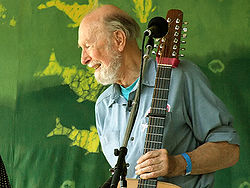
We also need to continue to mourn the life of Pete Seeger – he will be missed. Where are the folk singers who still believe that music can change the world?


Opening the word – Matthew 5:1-12 – the blessed people are not the ones we would expect and this is a good thing. It is a good thing that God is with those who are in the difficulties of life (which will be everyone at one time or another)

Watcha Into? – Jonathan is reading Philip K. Dick’s Do Androids Dream of Electric Sheep?


Kathryn is reading – The World’s Strongest Librarian by Josh Hanagarne


                                    Mr. Penumbra’s 24 Hour Book Store by Robin Sloan

                                    Undead by Clay Morgan


Please, please, please rate us on iTunes – thanks and get ready for Lent! Next episode – the relevance and purpose of denominations with the Rev. Tim Rich.

Monday, February 3, 2014

Worship - It Isn't Just About You!

Notes for season 4, episode 6 – Unselfish Worship

Worship – what does it look like, how should we do it, and why does it have to last so long?
In order to tackle these many questions Jonathan thought it might be best to bring on someone who wrestled with such questions on a regular basis. Jeff Olson is the Worship Arts Pastor at Christ Church in East Greenwich and was happy to be a guest host.
First off, worship is the entire time that you are in the building. It is not the 20 minutes of singing before the sermon or the extra long, extra silent prayer where you can snooze for a little bit and have a great dream about finding that perfect couch that is more comfortable than you ever imagined would be possible only to wake up finding yourself fully reclined on the pew. It is not that. Worship happens throughout the whole, entire service (and beyond).
Tell a story. This might be the big take-away of the conversation. Worship should be telling a story. These are stories with archetypes, narratives that speak to despair and hope, anger and release, pain and healing, doubt and faith, and much more. Some may say that you should always tell the story of the cross. Perhaps that is true, but that story is embedded in the other narratives that make up the daily struggles and hopes of life. Keep the cross present and bring in all of the other nuances and aspects of life and faith.
Try to engage people with the narrative. Invite people into the story; help them find their own place where they find hope or where they can share their sorrow.
Give room for God to work. Leave unscripted moments when God can speak in the silence, in the quiet music, in the sharing, in the spaces within the liturgy let God speak.
Finally, don’t be so darn selfish about worship. It is not always about what you like, but where you can find God. The worship service is not just about you but is about a community gathering together to find and encounter God and that will vary for every person. What may not speak to you may speak strongly to someone right next to you and part of being a community is celebrating the different ways God reaches and speaks to us.

FYI - Jeff spoke a bit about Henri Nouwen’s book The Return of the Prodigal Son – it is a good read.


Railige
Jeff started his angry time ranting against the culture of personal preference. The entire culture! Now before you go off and accuse this nice young man of being culturally insensitive, understand that he is taking issue with people who feel that worship (and life overall) should be about “what I want and when I want it.” It is all the fault of the iPod. Not really, but the ability to pick and choose what kind of music you like lends to this culture. It is the idea that worship should have the songs that I like, the preaching style that I like and should be the length that suits me best. This is the worship of personal preference. This is bad and should be eschewed (didn’t get to say that word in the last two episodes). It is about more than you so back off!

Jonathan is taking issue with a broad, lack of nuanced approach to doubt. Specifically Jonathan is looking at the story of Ryan Bell, a Seventh Day Adventist pastor who is giving up believing in God for one year. His blog can be found at yearwithoutgod.com. Doubt and faith a deep are profound parts of life, things that cannot be whittled down to a publicity stunt or a five minute sound bite. It is not so much the approach that Jonathan is having difficulty with, but the lack of nuance that is offered and the lack of awareness of the places in the Christian tradition where doubt is lifted up and embraced.

Opening the Word
1 Corinthians 1:1-9
Stop being so mean to Paul! Don’t be so quick to dismiss him because of some of the things he has written about women, there are many other things with Paul to celebrate. Anyway, in this passage we have the opening of a letter to a community where Paul is starting to lay out the bigger argument of his text. Paul has a problem with people who create a hierarchy of spiritual gifts. He does not get into that right away, but starts with encouragement to the people in Corinth. They all have gifts and all those gifts are important and necessary. They all have those gifts as a community. It is not a Lone Ranger approach to Christianity, but one that celebrates the many gifts that are found in the community.

Watcha’ Into?
Jonathan is enjoying the 1982 classic movie E.T. The Extra Terrestrial – it is wholesome goodness for the entire family.


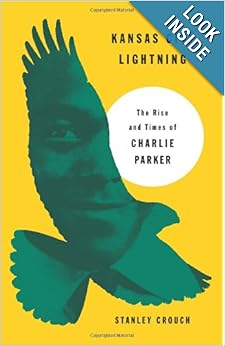
Jeff is reading Stanley Crouch’s work Kansas City Lightening about the life and times of Charley Parker. Listen to some good jazz (not that easy listening, light stuff, but good, solid jazz) and enjoy this book.


As always, please review us on ITunes – it helps with our ratings and standings and helps other people hear about the show. Let us know what you think!

Next episode – film and spirituality with Kathryn Palen

Saturday, January 18, 2014

Go Ahead, Be Wrong... We Wont Be Offended!


I want to start with a big disclaimer. Rabbi Amy misspoke. On the episode she stated that she was the first woman to be ordained a Rabbi by the Masorti/Conservative movement in Israel but she actually was the second. Our apologies to all who failed that round of trivia because they got the name wrong. This shows how raw and uncut and unplanned the whole show is. It is organic, it is natural, and it is prone to have errors from time to time.

All that said, we are excited to have the Rabbi Amy Levin join us for this episode! She was right a good 98% of the time. Amy is the Rabbi of Temple Torat Yisrael in East Greenwich, RI.


Speaking of errors, how wrong was Jonathan to think that his understanding of Jesus might lead to problems with the good Rabbi? As he found out, as long as he doesn’t go and hurt others he is free to think whatever he wants. The conversation was focused on supersessionism which basically says that Jesus fulfills God’s covenant with the Jews. This is a basic premise of Christianity and is a very real reason why Christians can enjoy the salty goodness of bacon. Yet being a good, progressive minded Protestant, Jonathan lives with a little bit of guilt because of such a stance. He wants to be nice to everyone, or at least hold up appearances of being nice. According to Amy it is ok. According to Amy Jonathan is free to believe what he wants even though he is wrong (according to Amy, we all know that he could never be wrong).

The conversation took a number of very different, very interesting turns. Perhaps the one point that should be lifted up is connection with the covenant with Abraham. This covenant goes before Sinai, before the law, and reminds us the God is the God of Isaac and Ishmael. There is a universal connection with such a covenant that can open things up.

And… try to avoid a cult of personality when looking at scripture and the people within it.

Railage
Jonathan is tired of Facebook pictures that are supposed to make you feel good, that are supposed to be moving, and that are supposed to be powerful but are so prevalent and abundant that they seem meaningless and empty. Stop posting the pictures and lists and other things that will “change my life.”

Amy is angry at the “Holiday” tree. It is a Christmas tree. Call it a Christmas tree. Stop trying to be nice to everyone!

Opening the Word
Exodus 13:17-17:16 – the whole thing! If that is a little too much, try Exodus 15:1-18 every morning for a week. Or try it every morning for more than a week. It is a great, powerful song proclaiming who God is in the Exodus story.

Watcha Into!
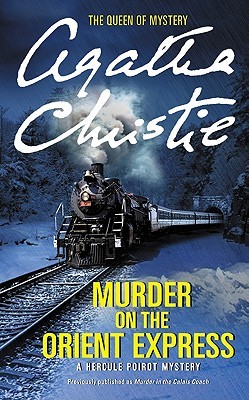
Jonathan is actually reading fiction! And not any fiction, but Agatha Christie’s Murder on the Orient Express. He did finish the book a has a blog post about it here where he takes what was a fun read and makes it dull.


Amy is listening to Salman Rushdie’s Joseph Anton: A Memoir. Before you decide to dismiss someone for something they did without actually learning about watching or reading the thing that has caused such offense, read (or listen to) this book. It is not fun to be labeled and condemned.


As always feel free to rate us on iTunes – your comments make a big difference. Feel free to send your thoughts to us: 12ecast@gmail.com


Coming up – worship, with Jeff Olsen!