Friday, April 4, 2014

Nothing is Real?

These are the show notes for season 4, episode 10, DoesThis Episode Exist?

The topic of the day is Doubt, and Jonathan is joined by regular guest host Darin Collins, pastor of Berean Baptist Church in Burrillville, RI.


 Doubt can be a tricky topic in the area of faith; there is a popular notion that if someone has a strong sense of belief then there is no room for doubt. Hogwash says Jonathan! For him, doubt can be a corrective that can lead to a deeper, more mature faith. Doubt can challenge assumptions about God, Christ, and faith in general that may not hold up to the realities of life. This does not mean one should throw out all understandings and aspects of faith, but that things should be revisited pushed and perhaps changed. One need not reject the very existence of God because there are moments of questioning. Instead one can question the understanding and assumptions about the nature of God. Remember, whenever we are talking about God we are talking about something that we know nothing about so we are going to be wrong in one way or another. Doubt can be a good thing.
            Darin brought a number of theologians into the conversation, specifically John Caputo. In his book, The Weakness of God, Caputo offers a view of God where God is a part of the creative process of life. In this approach God is not in control of every little aspect and detail of life, but is still an all-knowing presence in every moment of our life. Darin also mentioned Peter Rollins’ book Insurrection and Leonardo Boff’s work Passion ofChrist, Passion of the World.
            Overall, doubt can be a scary thing because you are stepping into the unknown and perhaps uncharted territory of faith, but offers a rich and deep relationship with God.

Rialage –
Jonathan is complaining about people who are complainingabout being a pastor. Yes, it is hard. Yes, it is tiring. So stop all the whining and get back to work (and look for the perks in your job because they are there)
Darin is tired of the creationists, especially on the heels of the debate between Bill Nye and Ken Ham. Stop it creationists, you are making the rest of us look stupid!

Opening the Word
John 6:25-40. You really should read the entire chapter. Actually you should read the entire Gospel. Actually, you should read the entire Bible, but we will focus on John 6:25-40. In a brilliant exegetical move Darin shows how when Jesus walks on water he is at the same time walking all over the emperor of Rome and the political establishment. In a very real way following Jesus calls us to follow someone who is more than the political power of the day or to even give credence to the political structures. We really should put our faith in Christ over others.

Watcha’ Into
Be a nerd! Seriously, read comic books, watch True Detective, and read past issues of Wired. Be true to who you are, embrace your nerd self in whatever way that may emerge and don’t apologize for it.


Thanks for listening and don’t forget to give us your thoughts, comments, and ratings on Itunes!

Monday, March 31, 2014

In With the Out Crowd

These are the show notes for season 4, episode 9, Who AreYou With?

In this episode Jonathan is joined by guest host Father Jakob Thibault, rector and pastor of The Church of the Holy Paraclete – a Christian Catholic Church.


In many ways we are defined by the people we hang out with and those with whom we decide to associate. That is why your mother never liked it when you hung out with Johnny Badseed even though he was soooo dreamy, and smooth, and never had a problem with the law that merited a federal case. You wanted to hang out with Johnny Badseed because he was so cool and just by being with him elevated your coolness factor. But then you find out that J.B. (that is what he close friends call him) likes to listen to Lawrence Welk when he is working on cars. And the more you get to know him the more he insists that you listen to Lawrence Welk and is going to open a garage where everyone has to listen to Lawrence Welk. You love working on cars. You love being cool. You love being round Johnny Badseed. Lawrence Welk, on the other hand, makes you want peel off your own face. Yet because you are hanging out with Mr. Johnny Badseed (which is what his teachers call him) people are giving you recordings of Lawrence Welk because they assume that you must like him if you are friends with Badseed. Now you are defined as a Lawrence Welk devotee all because you hang out with Johnny Badseed.
            Do you see how your identity is shaped by those you are connected with? This is what Jakob Thibault and Jonathan talk about, without the Lawrence Welk bashing in this most recent episode. Jakob shares his story of how he wrestled with his identity as a Catholic, primarily through the presence of and participation with the sacraments, and at the same time as an openly gay man. The Roman Catholic Church has drawn the strict line excluding homosexuality leaving Jakob to have to decide to stay and be silent about who he is or to leave what has been his spiritual home all of his life. In finding and connecting with the Christian Catholic Church (Old Catholic Church), Jakob has found a place where he can connect with his Catholic identity and be honest about who he is as a gay man.
            With every group, gathering, and people that we associate boundaries and lines are drawn that shape our identity and we constantly negotiate and navigate those boundaries. In Jakob’s case we see someone who deliberately decided to go outside of the lines drawn by the Roman Catholic Church because he was not willing to let go of a key identifying part of who he is. In the religious context (as well as others) this is something that we should ask ourselves again and again. There is no such thing as a perfect church or a perfect group of people. We will always have to compromise to some degree in acts of conformity, but we must always be weary as to the degree. There may be a point in all of our lives when we have to decide to step outside the boundaries, to say “no” to the demands of identity if it goes against who we truly are.
            The book that Jonathan referenced at the beginning of this segment is Catholic Identity: Balancing Reason, Faith,and Power by Michele Dillon. It is another good look at the ways different groups of people navigate their identity with an institution that does not fully accept them.

Railage
            Jonathan gets a flat tire and gets upset at the fact that he is getting upset and wishes he could be a little calmer. Jakob agrees since he is only on his third contractor for their church building and who knows how many plumbers. Really, they both need to relax and stop sweating the small stuff.

Opening the Word
            Matthew 6:24-34 – remember the lilies and then sell them for profit. Not really, but remember that God is with you and will not leave you. This is a challenge calling us to trust God with the little and big things in our lives. Not an easy thing to do.

Watcha’ Into –
            Jonathan LOVES the Lego Movie – sorry, you are going to have to wait for it to come out on video to see it (or find a pirated copy)
            Jakob is reading Ayn Rand’s work The Virtue ofSelfishness – don’t knock it until you try it.


Thanks again for listening!

Tuesday, March 4, 2014

Getting Along With Others

These are the notes for Season 4, Episode 8 – Not In MyHouse

In this episode Jonathan is joined by Tim Rich the rector of St. Luke’s Episcopal Church in East Greenwich, RI.


The topic is for the day is denominations; why are they needed and all that. Here is the spoiler – they are important and are needed.


If one were to surmise an argument against the relevance and reality of Christianity the multiplicity of denominations and traditions might be a good one. After all, if God was real and if Christ was the real thing, then why would Christians disagree with each other over what it means to worship and follow Christ? The division, disagreement, and factions can speak to a human creation of the divine and a human need to control that manufactured deity. This would be a fairly good argument to make, so atheists… you’re welcome.

On the other hand one could look at denominations and claim that they speak to God’s mercy, God richness, God’s depth, and God’s freedom. We have denominations because God does not say to us that we must worship in one particular way or another. We have denominations because God does not tell us exactly how we are to understand the revelation of Jesus Christ, the presence of the Holy Spirit, or the divine love that began the movements of the cosmos. We have denominations because we are free to try to understand and learn and grow in our faith. Perhaps the diversity of denominations and movements and traditions speak to the nature of God and the call of Christ in a different way. So take that, atheists!

I don’t want to over-glamorize the historical emergence of denominations. Very rarely have denominations emerged out of a gentlemen’s agreement that “you will worship you way and I will worship my way and we shall respect each other.” Instead they tended to emerge out of truth claims made strongly and violently. The diversity of denominations comes out of a history of human pride, selfishness, and violence and this is not something to be proud of.

This is not to say that denominations are bad. In the episode Jonathan and Tim make the point that today denominations are something to celebrate and embrace. Yes, they have a difficult past and that is not something to ignore, but they offer a history and heritage and a culture to being Christian. Each movement of Christianity has its gifts and particular part of its story. Just as different countries and ethnicities have different cultures and traditions so do denominations and that is something to celebrate but not at the exclusion of others. It is important to embrace the differences and the gifts and then to engage in a great exchange of stories. In the stories are markers that separate one group of people from the other and we can learn from those markers. The Baptist centrality of scripture may inform and lift up the Anglican just as the importance that an Anglican gives to the liturgy may deepen the spirituality of the Baptist.

To summarize – it is good to be different. It is important to know why you are different and to embrace those differences. It is good to learn about other people’s difference. It is good to share and learn.

Denominations can be good, as long as we no longer practice exclusion let go of the demand to be right we can do great things with each other.

FYI – the book that Tim mentioned is: People of the Way by Dwight Zscheile (whose last name neither Tim nor Jonathan can pronounce).


Railige
Jonathan is not happy (no surprise) with the American BibleSociety and Barna Group’s study that concluded that Providence, RI is the leastBiblically minded city in America. He is not happy because it is a weak study that does not really offer much to work with. Yet… it is very true that we are in a post-Christian culture and it is likely that many people do not read the Bible on a regular basis or engage in any Christian practices or embrace Christian tenants or doctrines (like those concerning the accuracy of the Bible).

Tim is a more profound thinker – he is angry at a billboard that encourages the idea of “more.” It is not the billboard that Tim is angry about but the cultural notion that what we have is not enough and that we need and deserve more. This approach to life is not going to end well because we will always want more and will never be satisfied even when we have all that we can.

Opening the word – Isaiah 58:1-9a – Since we are just about at Lent it seems appropriate to look at this passage and thing about what you can give up for the season. Try giving up something that will deepen your relationship with God and might be something that you can offer to someone in need.

Watcha Into? –
Tim watched the Olympics, or at least we are presuming that he did since he said he would. Go team USA!

Jonathan is reading And the MountainsEchoed by Khaled Hosseini. It is a good book about relationships, humanity, and living


Please, please, please rate us on iTunes – thanks and get ready for Lent! Next episode – identity and community with Father Jacob Lazarus (Thibault) of the Church of the Holy Paraclete


Thursday, February 20, 2014

Let's All Go to the Movies!


Note – there was a recording difficulty – sorry about that and thank you for patience as we continue to get better at this.

This episode Jonathan is joined by Kathryn Palen, the pastor of Central Baptist Church in Jamestown, RI and they talk about the movies. Movies include:


Here is the argument: in the arts you can find an expression of humanity’s struggle with the divine, with understanding the role of God in one’s life, and/or with a struggle to exist or live to the fullest. As Kathryn says, it is the narrative aspect of film that connects with so many people at different levels. With good film it does not matter so much what the specifics of the movie might be, one will find a place to connect. We all know what it is to be separated from our family, to be pushed in our lives, to be stretched in our love, or the be challenged with our world-view. In watch movies we can find a deeper universality and sometimes a place where we can wrestle with the presence (or lack of) the divine.
            Each of these films speak to living in one way or another and some speak to the presence of God in one way or another. This is contrary to the idea that anything that comes out of popular culture must be eschewed because it does not have a direct connection with a church sanctioned revelation. God is revealed in many ways and through many different mediums, including movies.
            Obviously we have only listed a small number of films – what are some of your favorites?


Railige
Includes a rant against denominational pussy-footing and being nice to a fault. Stop trying to please everyone, stop trying to be super nice, and go ahead an upset folks. It will all be ok.
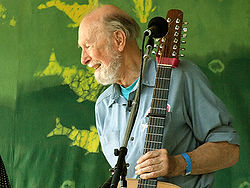
We also need to continue to mourn the life of Pete Seeger – he will be missed. Where are the folk singers who still believe that music can change the world?


Opening the word – Matthew 5:1-12 – the blessed people are not the ones we would expect and this is a good thing. It is a good thing that God is with those who are in the difficulties of life (which will be everyone at one time or another)

Watcha Into? – Jonathan is reading Philip K. Dick’s Do Androids Dream of Electric Sheep?


Kathryn is reading – The World’s Strongest Librarian by Josh Hanagarne


                                    Mr. Penumbra’s 24 Hour Book Store by Robin Sloan

                                    Undead by Clay Morgan


Please, please, please rate us on iTunes – thanks and get ready for Lent! Next episode – the relevance and purpose of denominations with the Rev. Tim Rich.