Have you ever wondered if the Thing (from Fantastic 4) is Jewish? Curious about Batman's religious upbringing?
In our last episode (on the Garden of Eden) we promised to post a link to a Super website. This website has gone through just about every superhero you can name and have found evidence to suggest a religious background.
I wont get into the conundrum of having a God and super powered beings. What does this do to Jesus? For now, just check out the website and enjoy!
Religious Affiliation of Comic Book Characters
Monday, March 19, 2012

Monday, March 12, 2012
You thought we were dead
Finally, a new episode - many, many complications. We look at the story of the Garden of Eden - the sound quality goes through a number of interesting stages
As always, enjoy it thought the following link, or via iTunes under 12enough... you know this!
As always, enjoy it thought the following link, or via iTunes under 12enough... you know this!
Monday, January 9, 2012
Why does it hurt so much?
This post corresponds with Season 2, Episode 1
We went over a number of different things in our last episode dealing with the issue of suffering. I (Jonathan) mentioned Process Theology and Predestination. Look them up, they are fun. Charley mentioned a number of very good books (see below). Overall, please give this some thought. Our theology is so important when we suffer and it is so often so weak and ill fitting to the suffering we face.
Check out:
When Bad Things Happen to Good People - Harold Kushner
A Grief Observed - C.S. Lewis
Our Greatest Gift - Henri Nouwen
God and Human Suffering - Douglas John Hall
We didn't mention "Open Theology" which may have some bits to add to the conversation.
From Watcha' Reading:
The Girard Reader, edited by James G. Williams
The Reader's Digest Bible: Illustrated Edition
Sorry no pictures this time - under the gun with other things!
We went over a number of different things in our last episode dealing with the issue of suffering. I (Jonathan) mentioned Process Theology and Predestination. Look them up, they are fun. Charley mentioned a number of very good books (see below). Overall, please give this some thought. Our theology is so important when we suffer and it is so often so weak and ill fitting to the suffering we face.
Check out:
When Bad Things Happen to Good People - Harold Kushner
A Grief Observed - C.S. Lewis
Our Greatest Gift - Henri Nouwen
God and Human Suffering - Douglas John Hall
We didn't mention "Open Theology" which may have some bits to add to the conversation.
From Watcha' Reading:
The Girard Reader, edited by James G. Williams
The Reader's Digest Bible: Illustrated Edition
Sorry no pictures this time - under the gun with other things!
Thursday, December 15, 2011
Stop That Yelling!
This blog post corresponds with Season 1, Episode 12 - Parenting


Sometimes I wonder if everyone has the right to be a parent. Perhaps it isn't a matter of right but more of calling. Parenting is a ministry; you are supposed to raise these little people in a way so they will know God and be able to make responsible decisions about their faith on their own when the time comes. We make a big deal about people hearing their calling to ministry and mission work. Sometimes we talk about individual's callings to different vocations. How often do we talk about someone being called to parenting?
I think it is something we should consider. I am not suggesting that we should tell people who can and who cannot be a parent. What I am suggesting is that we take seriously the decision to become a parent (if a decision is involved) and ask ourselves where God might be in this ministry. That would be a great first step.
Here are some of the books mentioned in the podcast:

The Encouraging Parent: How to Stop Yelling at your Kids and Start Teaching Them Confidence, Self-Discipline, and Joy
by Rodney W. Kennedy

Nurture Shock by Po Bronson and Ashley Merryman
From Watcha' Reading

The Great Influenza by John M. Barry
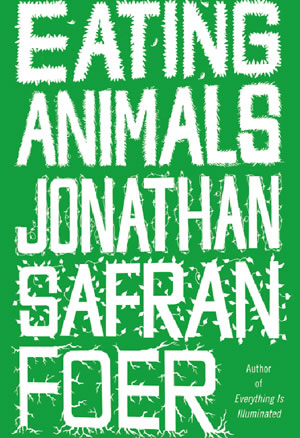
Eating Animals by Jonathan Safran Foer
Saturday, October 29, 2011
Your a Grand Old Flag...
I recognize that this post is a little past the publication
date of our 10th episode (and that I missed the 9th episode),
but better late than never. If you aren’t happy with this timeline, you can write
into the studio and send a s.a.s.e. in order to get your money back.
I am fascinated how emotional people get when discussing the
place of the flag in the church and how often the argument refers to the idea
that this nation was founded on “Christian values.” If this argument stands,
then what would people say of flags in synagogues, or mosques, or Hindu
temples, or Buddhist temples? Should the flag not be in those places of worship
because the country is not founded on the same values? What of humanists,
rationalists, and atheists? If they were to have temples (and some of them do)
should those places of worship have the American flag in them?
My fear with the emotional demand for the flag in the
sanctuary is that it carries a strong weight of antidisestablishmentarianism (and
I love having the opportunity to use that word in a blog post). It moves
towards the belief that Christianity and the United States are one and should
always be considered such. Such a stance lowers other religions and is
dangerous to any hope that Christianity stays true to the essence of its faith.
We discussed this on the podcast, and I just wanted to offer a little more to
chew on.
The podcast featured Darin Collins whose church website can
be found here. We also mentioned the following books:

The Subversion of Christianity, by Jacques Ellul

The Peaceable Kingdom, by Stanley Hauerwas
And as you are all waiting for, the selections from Whatca’ Reading:


The Nature and Purpose of the Church
(The updated publication) The Nature and Mission of the Church

Bird by Bird, by Anne Lamott
Thursday, September 22, 2011
Don't Let the Children Come to Me.... They Have Dirty, Sticky Hands
The 8th episode has been up for about a week and no doubt causing quite a stir. Imagine, children in worship being treated as actual human beings. It is absurd!
Obviously I don’t agree with such sentiments – it is sarcasm, didn’t you hear it in the tone of voice? One of the things that the question of children in worship begs is the purpose of worship. The majority of us mainline Protestant folks tend to shape our service for people who are already Christians; it is not a seeker oriented service. Yet Baptists (and others) do not view children as Christians. They have not made a commitment to Christ. If this is the case, then shouldn’t the worship service, or at least the part when they are present, be focused on moving them to make the commitment to Christ?
Actually, shouldn’t calling people to Christ be a part of every worship service just in case there is someone visiting who isn’t a Christian? You Evangelicals in the back, calm down and stop the self-righteous chest thumping, your services are so seeker-friendly that a moth in a pitch black room could find you. Anyway, the norm for seeker services may not be what we would want for our children.
How do we reach out to children, speak to children, and at the same time make the worship service engaging for adults. Here are a couple of thoughts:
1. Children pick up on much more than we give them credit
2. Adults get out much more from “simplistic” language than we give them credit
So sleep on that and hopefully the next episode will be out soon. Here are the books that were mentioned:
Brown Bag: A Bag Full of Sermons for Children by Jerry Marshall Jordan

A Time With Our Children: Stories for Use in Worship by Diane Deming

From Watcha' Reading
After Virtue: A Study in Moral Theory by Alasdair MacIntyre

Incognito: The Secret Lives of the Brain by David Eagleman

Obviously I don’t agree with such sentiments – it is sarcasm, didn’t you hear it in the tone of voice? One of the things that the question of children in worship begs is the purpose of worship. The majority of us mainline Protestant folks tend to shape our service for people who are already Christians; it is not a seeker oriented service. Yet Baptists (and others) do not view children as Christians. They have not made a commitment to Christ. If this is the case, then shouldn’t the worship service, or at least the part when they are present, be focused on moving them to make the commitment to Christ?
Actually, shouldn’t calling people to Christ be a part of every worship service just in case there is someone visiting who isn’t a Christian? You Evangelicals in the back, calm down and stop the self-righteous chest thumping, your services are so seeker-friendly that a moth in a pitch black room could find you. Anyway, the norm for seeker services may not be what we would want for our children.
How do we reach out to children, speak to children, and at the same time make the worship service engaging for adults. Here are a couple of thoughts:
1. Children pick up on much more than we give them credit
2. Adults get out much more from “simplistic” language than we give them credit
So sleep on that and hopefully the next episode will be out soon. Here are the books that were mentioned:
Brown Bag: A Bag Full of Sermons for Children by Jerry Marshall Jordan

A Time With Our Children: Stories for Use in Worship by Diane Deming

From Watcha' Reading
After Virtue: A Study in Moral Theory by Alasdair MacIntyre

Incognito: The Secret Lives of the Brain by David Eagleman

Monday, August 15, 2011
Drink This Brother, May It Serve You Well
Episode 7 is up! Listen and you can get the scoop and the skinny on the differences between Sacraments and Ordinances.
Who cares? This is a good questions and I'm glad you asked. A great number of disagreements about church life and practices emerge out of a misunderstanding (or lack of understanding) of the theology of that tradition. Why is the priest placed on a pedestal (metaphorical and literal)? Why does the minister wear a robe? Why doesn't the minister wear a robe? Do I have to be baptized to take communion? When we don't know our theology our answers become pragmatic and usually the theology becomes watered down and vapid. Or a conflict emerges within the church because of the lack of theological acuity. So it is important to understand what it is that your tradition practices and then to decide if it is something you can ascribe to.
The other reason it is important for Charley and I to talk about the differences between Sacraments and Ordinances is that is makes us sound smart.
Here are the books referenced in the podcast:

Systematic Theology: Roman Catholic Perspectives. Francis Schussler Fiorenza and John Galvin eds.

Doors to the Sacred by Joseph Martos

A Baptist Manual of Polity and Practice by Norman Maring and Winthrop Hudson

Baptist Sacramentalism, Anthony Cross and Philip Thompson, eds.

Promise and Presence by John Colwell
From Watcha' Reading

Activate by Nelson Searcy and Kerrick Thomas

Freakonomics by Steven Levitt and Stephen Dubner
Who cares? This is a good questions and I'm glad you asked. A great number of disagreements about church life and practices emerge out of a misunderstanding (or lack of understanding) of the theology of that tradition. Why is the priest placed on a pedestal (metaphorical and literal)? Why does the minister wear a robe? Why doesn't the minister wear a robe? Do I have to be baptized to take communion? When we don't know our theology our answers become pragmatic and usually the theology becomes watered down and vapid. Or a conflict emerges within the church because of the lack of theological acuity. So it is important to understand what it is that your tradition practices and then to decide if it is something you can ascribe to.
The other reason it is important for Charley and I to talk about the differences between Sacraments and Ordinances is that is makes us sound smart.
Here are the books referenced in the podcast:

Systematic Theology: Roman Catholic Perspectives. Francis Schussler Fiorenza and John Galvin eds.

Doors to the Sacred by Joseph Martos

A Baptist Manual of Polity and Practice by Norman Maring and Winthrop Hudson

Baptist Sacramentalism, Anthony Cross and Philip Thompson, eds.

Promise and Presence by John Colwell
From Watcha' Reading

Activate by Nelson Searcy and Kerrick Thomas
Freakonomics by Steven Levitt and Stephen Dubner
Subscribe to:
Posts (Atom)